
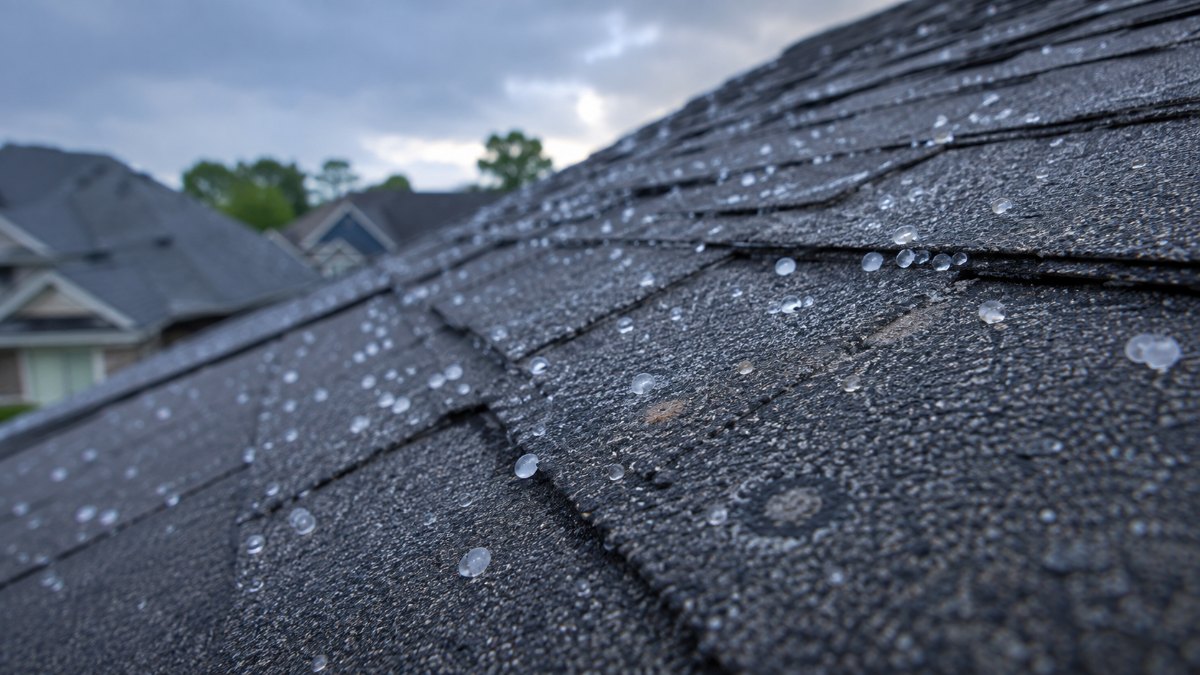
First: make it safe and stop the water
Before anything else, deal with active leaks. Buckets, move the furniture, and if water is coming through a ceiling, poke a small hole to drain it into a bucket before the drywall lets go all at once. If a limb has punched the deck, get a tarp on it. Emergency tarping is a normal, documentable expense; keep the receipt.
Do not go on the roof yourself after a hail storm. Wet shingles, loose granules, and hail-slick decking put more homeowners in the emergency room than the storm did.
Second: photograph everything, from the ground
Date-stamped phone photos of: hailstones next to something for scale (a coin, a tape measure), dented gutters and downspouts, dinged AC fins, cracked window screens, splatter marks on the deck or the fence, and any interior water spots. Ground-level evidence of hail size and direction is exactly what an adjuster wants to see and it costs you nothing.
Write down the date and time of the storm. If you have a weather app that logs it, screenshot it.
Third: get a real inspection before you call anyone with a checkbook
Have a roofer you trust inspect and document the roof: photos of every slope, chalk-circled hits, gutter and vent damage, and a written summary. This is the step that turns 'I think we got hit' into a claim with evidence. It also tells you whether the damage is cosmetic or functional, which decides whether a claim is even worth filing.
The measurement side of this is where a lot of shops waste a day. Our own shop stopped climbing to measure years ago; the roof measurements for the estimate can be ordered by address and delivered the same day, which means the inspection visit is about damage, not tape measures. More on that in a separate post.
Fourth: call your insurer, with your documentation in hand
Now file. You will have the storm date, the ground photos, and a roofer's inspection, which makes you the easiest claim on the adjuster's list that week. Ask for the adjuster inspection date and let your roofer know so they can be there. Two sets of eyes on the roof at the same time settles most disagreements before they start.
Your policy has a deadline for reporting storm damage. Do not sit on it, but do not call in a panic before you have anything to show either.
What not to sign
Nothing on the first visit. Not a contingency agreement, not an assignment of benefits, not a 'we will handle the insurance for you' form, and not anything with a blank where the price goes. A legitimate roofer will give you the inspection report and a written estimate and let you read both. Anyone who needs a signature to 'hold your spot' or 'get on the schedule before the storm rush' is selling urgency, not roofing.
And if the truck is from three states away, read our post on hiring a roofer before you do anything else.