
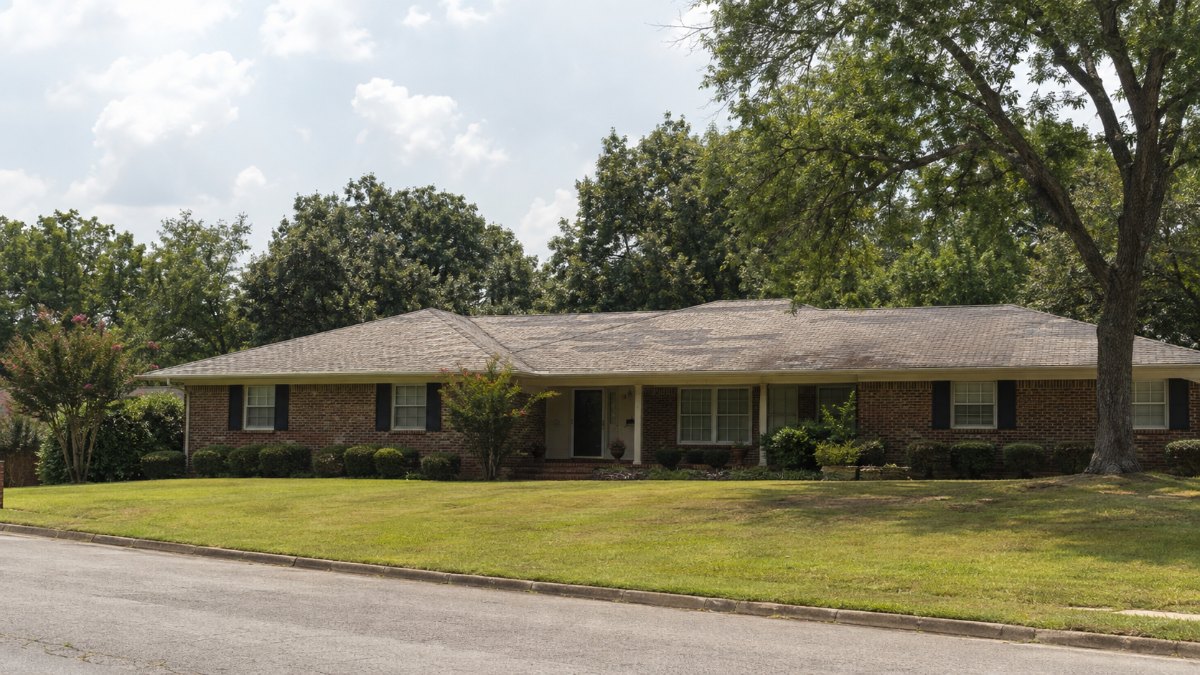
The ranges we actually saw
Three-tab asphalt: call it fifteen years here, sometimes less on a west-facing slope with no shade. Architectural asphalt: high teens to low twenties, and the premium lines can push toward the mid-twenties on a well-ventilated house. Metal: decades, with the fasteners and the coating deciding how many. Tile and slate: longer than the house, if the structure was built to carry them, but rare in this market. These are our field numbers from tear-offs, not warranty language; the warranty is a contract about defects, not a promise about your roof's life.
If a salesman quotes you a lifespan without asking which way the house faces or whether the attic breathes, he is reading the box.
Sun: the Mid-South's slow killer
Our summers cook a roof. UV and heat break down the asphalt, the shingle loses granules, and it gets brittle. South and west slopes go first, sometimes years before the north side. Lighter colors and better attic ventilation buy real time; a dark roof over a sealed-up attic is a shingle oven.
Hail and wind: the sudden ones
This is why half the roofing in this region is insurance work. A hail season can take years off a roof in one afternoon, and straight-line wind lifts tabs and breaks seals you will not see from the ground. If your roof has been through a documented event, its remaining life is not what the calendar says it is; get it inspected.
Ventilation and installation: the two you control
A roof that cannot breathe dies young. Blocked soffits, no ridge vent, bathroom fans dumped into the attic instead of outside: we saw fifteen-year roofs on ten-year-old houses for exactly these reasons. Fix the attic and the next roof lasts longer than the last one.
Installation is the other half. Nail placement, starter course, ice-and-water in the valleys, flashing done with metal instead of caulk. A premium shingle installed carelessly loses to a mid-grade shingle installed right. Every time.
How to get the long end of the range
Keep the gutters clear so water leaves the roof. Trim limbs that shade and drop debris on it. Get an inspection after any real storm and every couple of years regardless. Fix the small stuff (a lifted tab, a cracked boot, a loose flashing) when it is small. And when it is time, do not let anyone talk you into a repair on a roof that is finished; the numbers above are the honest ranges, and knowing where you are on the curve is most of the battle.